
PORT MORESBY — Three years ago, a PNG importer could place an order for US dollars and wait months to get them. Shelves ran thin, overseas suppliers lost patience, and investors could not send profits home. Today the queue has all but cleared. The question for 2027 is whether PNG can keep it that way once the International Monetary Fund steps back.
This is The Fix, our Sunday look at one problem holding the country back and what could solve it. We start with one where the news is mostly good, because a fix that is half-finished is the easiest kind to lose.
The problem: a decade of waiting for dollars
PNG’s foreign exchange shortage began when PNG LNG finished construction in 2014 and the flood of investment dollars dried up. The kina was held higher than the market would bear, so more people wanted dollars than there were dollars to sell. The Bank of PNG rationed what it had, and a backlog of unfilled orders built up.
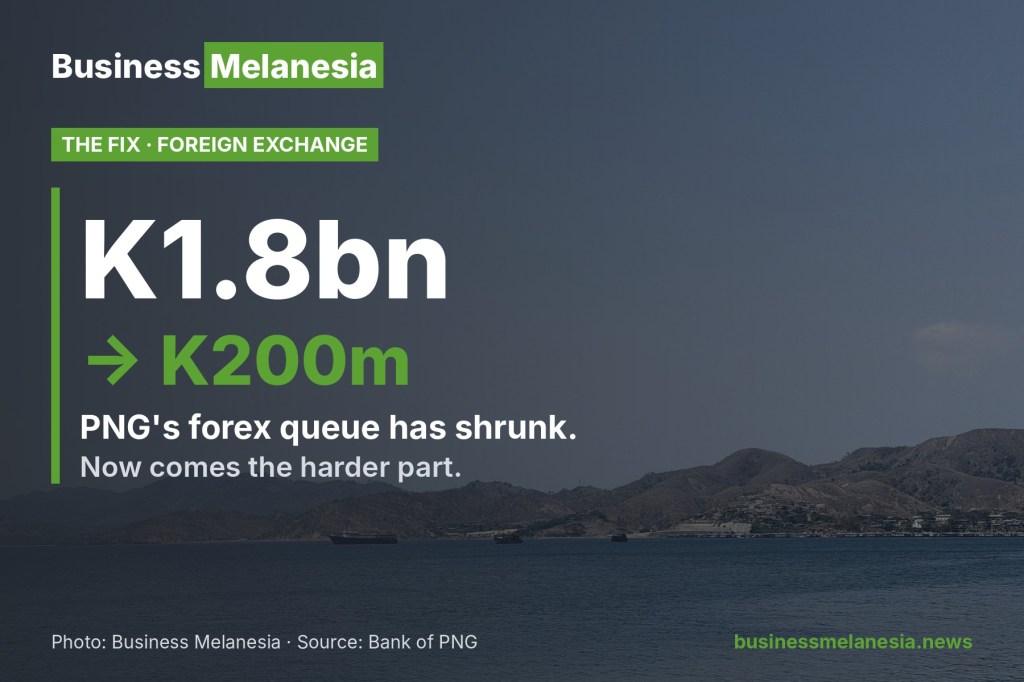
By the bank’s own account that backlog peaked at about K1.8 billion. For most of the past decade, forex was the top complaint in the annual PNG 100 CEO Survey run by Business Advantage PNG and Westpac. It hurt everyone: the supermarket waiting on a container, the hospital buying equipment, the overseas company deciding whether PNG was worth the trouble.
What’s already working
Credit where it is due. In January 2024 the central bank, working with the IMF, moved to a “crawl-like” exchange rate: the kina is allowed to slide gradually, on a managed path, towards a level where supply meets demand. It has gone from about 28.5 US cents in 2023 to about 22.3 cents on the bank’s latest published rate.
Alongside that came weekly foreign currency auctions and a triage system. Essential imports such as food, medicine and infrastructure equipment are served first. Dividend payments and offshore investments by super funds wait in a lower queue. Strong prices for gold, coffee and cocoa did the rest.
The result: Deputy Governor Jeffery Yabom said in March the backlog was down to around K200 million. “Companies are no longer complaining about foreign exchange,” he said. The 2026 CEO survey agreed, with forex falling from first to 12th place. Governor Elizabeth Genia has been careful not to oversell it, saying full convertibility is not here yet but the country is “moving in the right direction.”
The IMF agrees. In its October statement it said the crawl had considerably narrowed the kina’s overvaluation and, with good commodity prices, significantly eased shortages. Reserves stood at about US$4 billion at the end of June, roughly five months of imports. Treasurer Ian Ling-Stuckey noted PNG is only the 15th country to reach seven straight IMF reviews without delay. That is a record worth being proud of.
Why the job isn’t finished
Here is our take. Part of the cure was luck. High commodity prices brought in dollars, and prices do not stay high forever. The IMF expects growth to slow to 3.1 per cent this year from 6.2 per cent in 2025, as LNG output plateaus and El Niño hits farms and mines. Fewer export dollars means more pressure on the queue.
Rationing has also not formally ended. The priority list is still in place, which means the market is managed rather than free. And the IMF programme that gave the reforms their backbone expires next month. The Fund says any request for a new programme will be considered after the 2027 election. That leaves a gap of a year or more in which PNG keeps the discipline on its own.
There is good evidence it can be done. Fiji tightened exchange controls when COVID hit, to protect its reserves, then loosened them step by step as tourism returned: a round in 2023, another in August 2024, new guidelines from January 2026. Each round handed more everyday approvals to commercial banks. The Reserve Bank of Fiji describes it as a sequenced programme run alongside other reforms. Businesses could see what was coming and plan for it.
What could help
First, publish the rules of the crawl. The IMF’s own advice is that the kina’s path needs greater transparency about how it works and clearer communication. If importers and investors know the pace and the limits, they stop hoarding dollars “just in case”, and the queue shrinks on its own. This sits with the Bank of PNG and its Monetary Policy Committee.
Second, set out a dated roadmap to end rationing, Fiji-style. Move categories off the priority list one at a time, and publish the size of the backlog regularly so the public can see progress. A small, steady release of information builds the confidence that money alone cannot buy.
Third, lock the reforms in before the programme ends. Treasury and the central bank have built good habits under IMF reviews. Writing them into Budget rules and the bank’s own published framework protects them through an election year, whoever forms the next government.
Fourth, earn more dollars outside the big projects. Coffee, cocoa, fisheries and tourism bring foreign currency into villages and towns, not just into project accounts offshore. Highlands growers selling together through co-operatives, as we reported this week, show the kind of export push that makes the kina stronger from the ground up.
What to watch
Tuesday’s Budget, for how Treasury plans to keep the fiscal discipline that steadied the kina. The IMF board’s sign-off on PNG’s final review, which would release about US$82 million plus climate financing. The Papua LNG decision due in December, which could bring the next wave of investment dollars. And the central bank’s next policy statement, for any word on publishing the crawl’s rules or easing the priority list.
PNG has done the hard part of shortening the queue. The next step is making sure nobody has to join it again.
Image: Business Melanesia.



Leave a Reply