
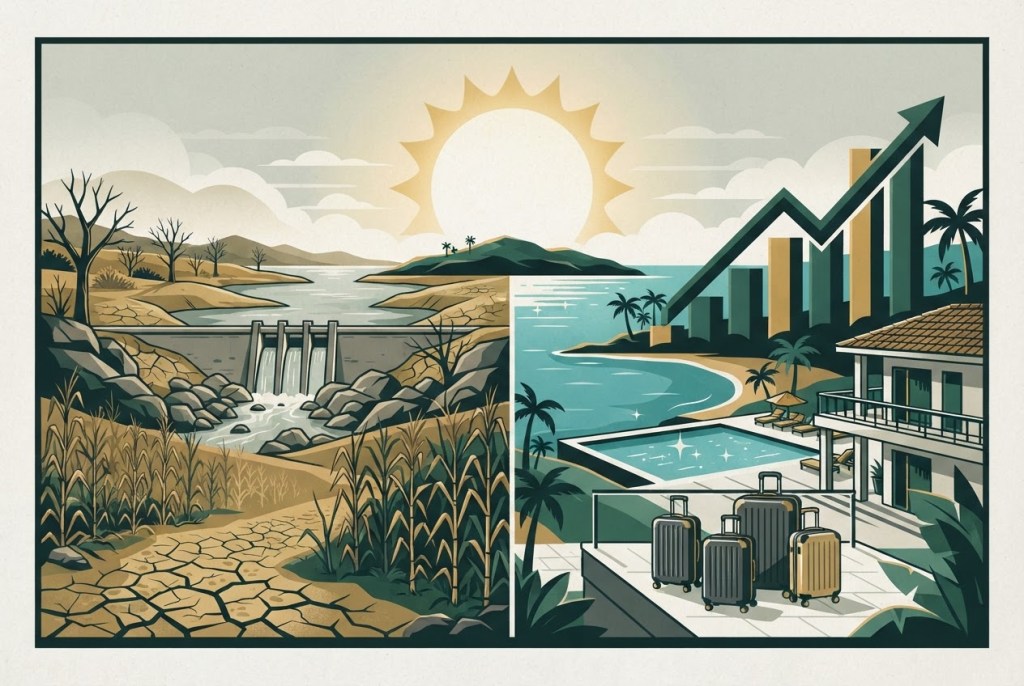
SUVA — Fiji has spent 2026 proving that a small island economy can take a punch. Now it is bracing for the next one.
The Reserve Bank of Fiji’s Macroeconomic Committee this week raised its growth estimate for this year to 1.8 per cent, up from 1.5 per cent in June. But it cut next year’s forecast from 2.5 per cent to 2 per cent, warning that a severe El Niño will intensify into the first half of 2027.
What held Fiji up
Governor Ariff Ali pointed to tourism first. Visitor arrivals were up 4 per cent in the first ten months and are on track to pass one million for the year. Remittances, government spending, construction and bank lending all helped, and foreign reserves stood at about FJ$4.4 billion this week, enough for roughly five and a half months of imports, as reported by FBC News.
That is a solid performance in a year when fuel prices spiked across the region. Fiji Airways alone expects close to FJ$300 million in extra fuel costs and another loss this year, FijiVillage reported earlier this month, and the airline says it is working on a five-year plan and stronger fuel hedging.
The dry season ahead
The bank expects dry weather to cut crop yields and livestock output, push food prices up, and reduce hydropower and water production. Restrictions on water use are already being considered. Ali also named slower-burning risks: labour shortages, weak productivity, and the toll of HIV, drugs and crime on the workforce. Growth is forecast to recover to 2.7 per cent in 2028 and 2029.
The lesson for PNG
PNG faces the same drought and the same fuel bill, but it does not have Fiji’s cushion. Fiji pulls in more than a million visitors a year. PNG welcomed a little over 130,000 in 2025, according to the Tourism Promotion Authority. When Fiji’s farms and power stations struggle, its hotels keep money flowing. PNG leans much more on resources and the gardens that feed most families.
Our take: Fiji’s year shows the value of having more than one engine. Tourism, remittances and steady bank lending kept the lights on when costs soared. The other lesson is the honesty of the forecast itself. A central bank that names its risks early, from drought to drugs, gives business time to plan.
What to watch: Fiji’s water and power rationing decisions in the coming weeks, whether arrivals hold up through the dry months, and the committee’s next review in the second quarter of 2027.
Correction: An earlier version of this story wrongly named the Fiji Airways executive quoted on fuel costs. The reference has been corrected.
Image: Illustration.





Leave a Reply