
WAU — More than 63,000 people in Wau-Waria district are short of water and food, and the first of their El Niño relief money has only just cleared the bank.
The district has received K787,000 of its K2.5 million allocation, NBC News reported, after drought assessments across all 43 wards counted 63,756 affected people in more than 14,000 households. About K473,000 is going on three bore water systems for Wau town, to be drilled by ADRA PNG, alongside a diesel pump, filtration tanks and medical supplies.
District chief executive John Orebut said Wau-Waria was among the first to submit its assessment, but problems with a new banking system held up the money until the local MP chased it down. Food and water distribution should begin once outstanding supplier payments clear this week.
Tankers and desalination
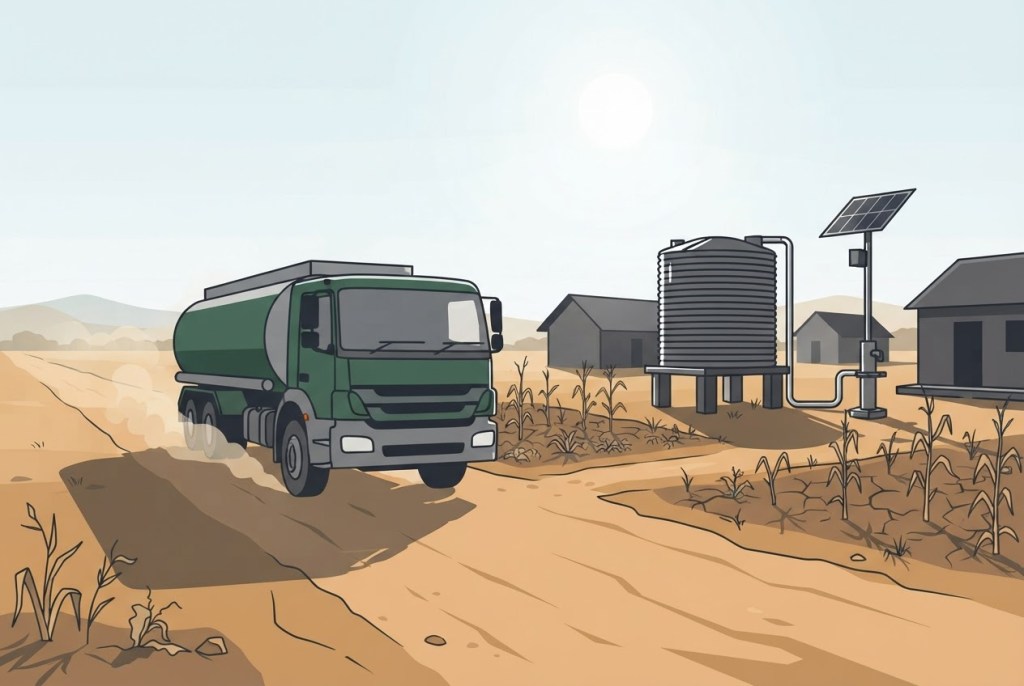
In West New Britain, Talasea MP Freddie Reu Kumai said his district spent K376,000 of its relief funds on a 10,000-litre water tanker to serve 16 wards around Kimbe, and set aside K1 million for supplies, K40,000 for each of its 25 wards. Families there are on their second round of food deliveries. The provincial government has separately shipped a mobile desalination unit to Bali Island.
Prime Minister James Marape announced the K2.5 million per district in September. A letter in The National this week said many districts are still waiting, and called for MPs to account publicly for how the money is spent.
The peak is now
A new joint analysis by seven UN agencies, reported by RNZ Pacific, expects El Niño to last another six months and peak in December, and names PNG as a country of particular concern. The Government and UN are preparing drought assistance for about 680,000 people. Australia this week added about K4 million through churches and aid groups, as we reported.
Our take
The pattern is clear: districts that did their homework early, with ward counts and suppliers lined up, are spending first. That is good practice worth copying. But money arriving at the peak of a drought is money arriving late. Boreholes take weeks to drill, and gardens planted late will not feed families until well into 2027.
The bigger risk is uneven delivery. The same K2.5 million goes to a district of 60,000 drought-hit people as to one with far fewer, and without published acquittals nobody outside a district office can tell whether it reached the worst-hit wards.
What to watch
The National Weather Service’s next outlook; how much the 1 December Budget sets aside for El Niño recovery in 2027; and whether districts begin publishing what they have spent.
Image: Illustration.



Leave a Reply