
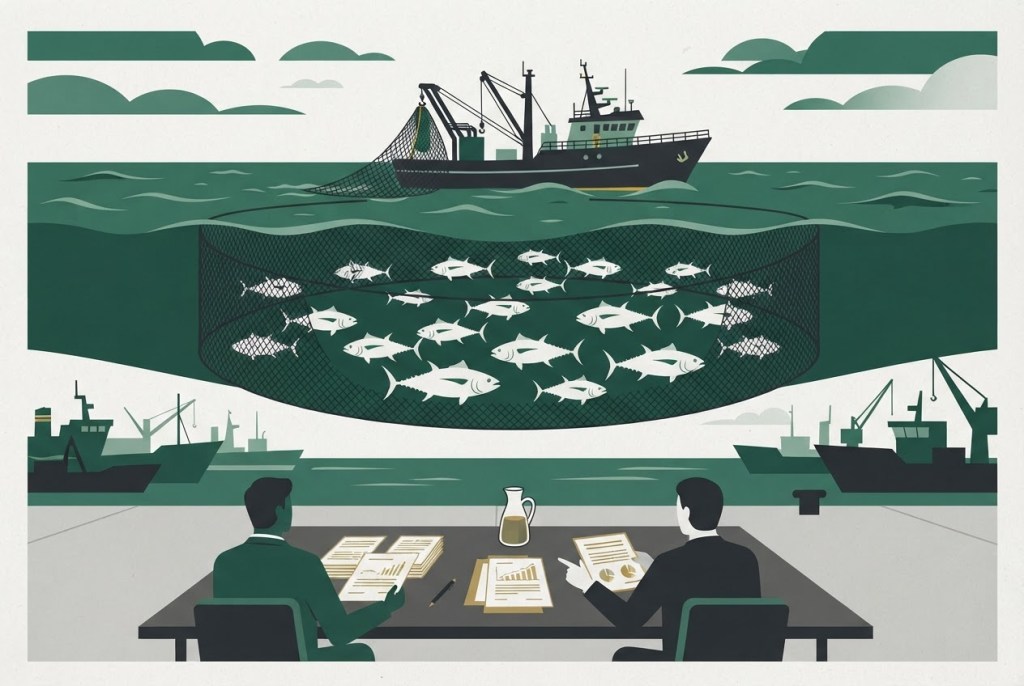
PORT VILA — The most valuable fish in the Pacific is about to get a week of hard bargaining. The Western and Central Pacific Fisheries Commission opens its annual meeting in Port Vila on Monday, and the region’s island nations are already lining up their positions.
The stakes are big. The Western and Central Pacific supplies more than half the world’s tuna, about 2.5 million tonnes a year, and earns Pacific governments around US$500 million a year in fishing access fees, the Pacific Islands Forum Fisheries Agency (FFA) says. Parties to the Nauru Agreement, the bloc PNG belongs to, met in Port Vila this week, as did the five-nation South Pacific Group, which has agreed to present a united position.
The bigeye problem
Before the main meeting, scientists hold a special session on Friday and Saturday on bigeye tuna. The Pacific Community’s fisheries scientists say this year’s assessment suggested bigeye is more depleted than thought in 2023, and they have built a new set of 1,152 model scenarios to test how fishing limits should respond. Tighter limits on longliners are a real possibility.
The longer-term worry is climate. Speakers at an FFA event during the COP31 talks warned that warming seas are expected to push tuna east, out of the waters some Pacific nations manage and earn from.
The PNG angle
PNG sits in the west of that fishery, which is exactly where a climate shift would hurt most. It also has the most to gain from investment. In Shenzhen last week, President Marcos and Prime Minister Marape discussed Philippine investment in PNG’s fisheries and port infrastructure. Philippine Foreign Affairs Secretary Ma Theresa Lazaro pointed to PNG’s tuna industry and the roughly 38,000 Filipinos living in PNG.
Our take
Licence fees are good money, but they are rent. The real value is in catching, freezing, canning and exporting at home, which creates jobs and keeps more of each fish in the country. If the fish are going to move, PNG’s strategy has to move faster: lock in processing investment, cold storage and port upgrades now, while the tuna is still swimming through PNG waters.
The Philippine interest is a genuine opening, given how much of the region’s canning know-how sits in General Santos. The question is whether talk in Shenzhen becomes signed deals in Lae and Madang.
What to watch
Any new bigeye limits agreed by 5 December, whether PNG and its PNA partners hold their line on purse-seine rules, and whether Philippine firms put names and numbers to their PNG plans.
Correction: An earlier version said the South Pacific Group had agreed to vote together. It has agreed to present a united position.
Image: Illustration.




Leave a Reply