
Analysis · Business Melanesia Newsroom
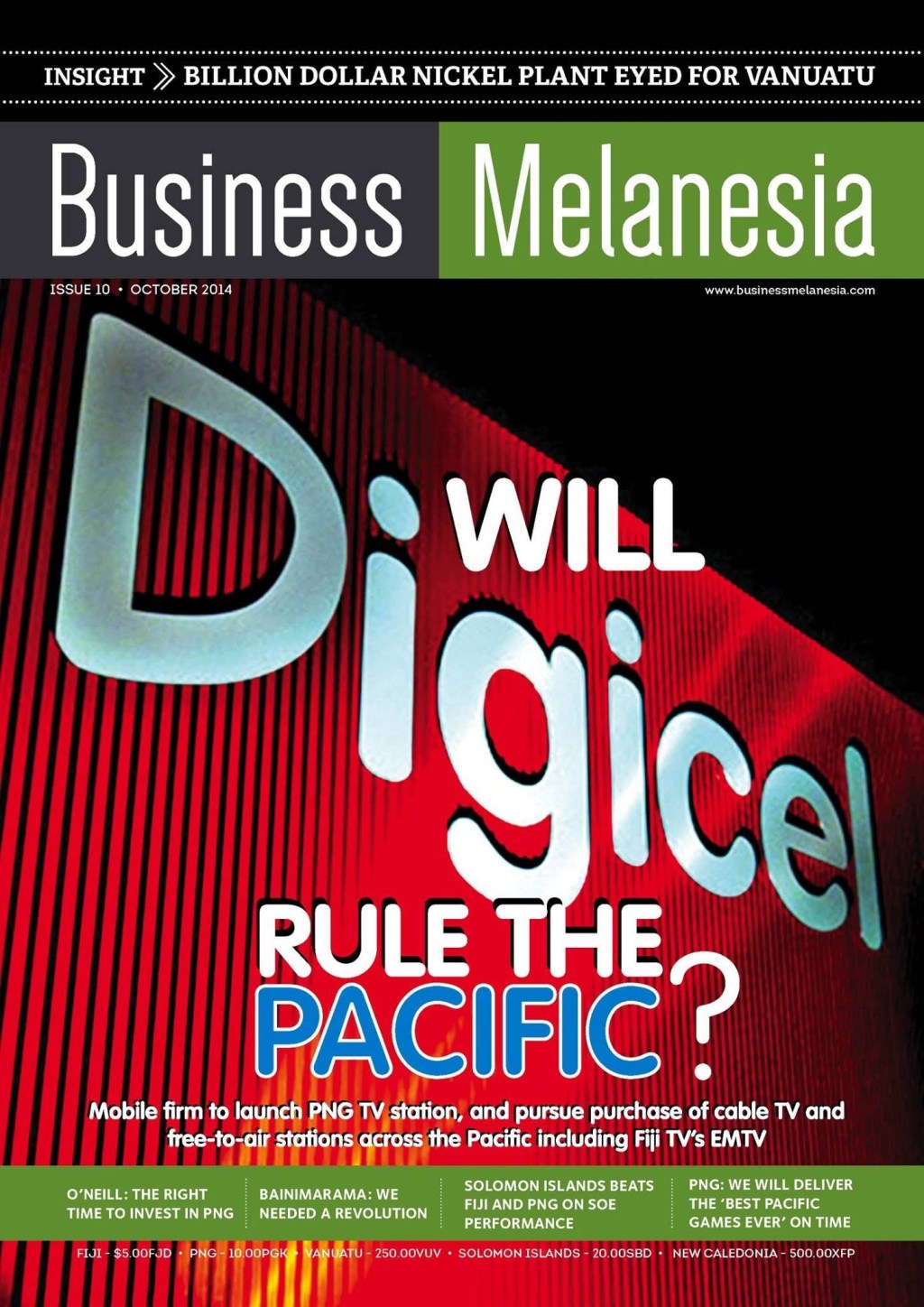
In October 2014, Business Melanesia put Digicel on its cover and asked a simple question: will Digicel rule the Pacific? The mobile company was then planning its own PNG television station and eyeing broadcasters across the region.
The question is back. Digicel PNG has been granted a 15-year 5G spectrum licence by NICTA, The National reported this week, with chief executive Frédéric Debord saying it lays “the foundation for the next generation of connectivity”.
But the Digicel of 2026 is a very different company, and it no longer has the field to itself.
Under a new flag
Since July 2022, Digicel’s Pacific business has belonged to Australia’s Telstra. Most of the US$1.6 billion price was paid by Canberra, in a deal widely seen as keeping the region’s biggest telco out of Chinese hands.
The red brand and the local team stayed, but the big decisions are now made in Melbourne. Telstra has told investors its Pacific business operates in a “challenging environment”, and Digicel PNG has had three different leaders since mid-2024.
A real fight at last
For most of its time in PNG, Digicel faced little serious competition. That changed in 2022 when Vodafone PNG, owned by Fiji’s ATH, switched on its network. Vodafone now says it has about two million customers and carries more than half the country’s mobile data.
The two rivals have since agreed to share towers, and both are lining up for 5G. Under NICTA’s rules, Vodafone must bring 5G to Port Moresby and at least one other city within 18 months.
Then there is Starlink. After two years of legal battles, the satellite service was licensed in April, and within weeks Digicel had signed on as its first business reseller in PNG, embracing the very technology that could one day compete with it in the bush.
The price of being connected
For ordinary Papua New Guineans, the real question is not 5G but cost. Data is far cheaper than in the days before 2007, when a SIM starter pack cost K125. Even so, a 10GB monthly plan still takes about 3 per cent of an average monthly income, more than double what Fijians pay.
Starlink will not fix that soon. Business plans through local resellers start at around K600 a month before equipment, well beyond a village budget. And only about one in five Papua New Guineans uses the internet at all.
Those who do are mostly young, and mostly on Facebook. That brings real opportunity, from online selling to learning, but also the fake news, scams and abuse the government cited when police blocked Facebook for a day last year. That move drew wide criticism and was easily dodged with VPN apps.
Our take
5G will make life faster for banks, mines and offices in Port Moresby and Lae. The bigger prize is the village. That means holding operators to their promise to build new rural towers, using licence money to bring satellite links to schools and aid posts, and keeping prices falling through genuine competition.
It also means asking who owns our digital future. In 2014 this magazine warned against one company dominating both telecoms and media. Today PNG’s biggest networks and its new undersea cables are foreign-owned or foreign-funded. That is not necessarily bad, but it demands strong regulation and more Papua New Guineans in the boardroom.
So, does Digicel rule the Pacific? It still leads, but under Australian ownership and with rivals on the ground and in the sky. Whether PNG wins depends on the benefits reaching the village as well as the boardroom.




Leave a Reply