
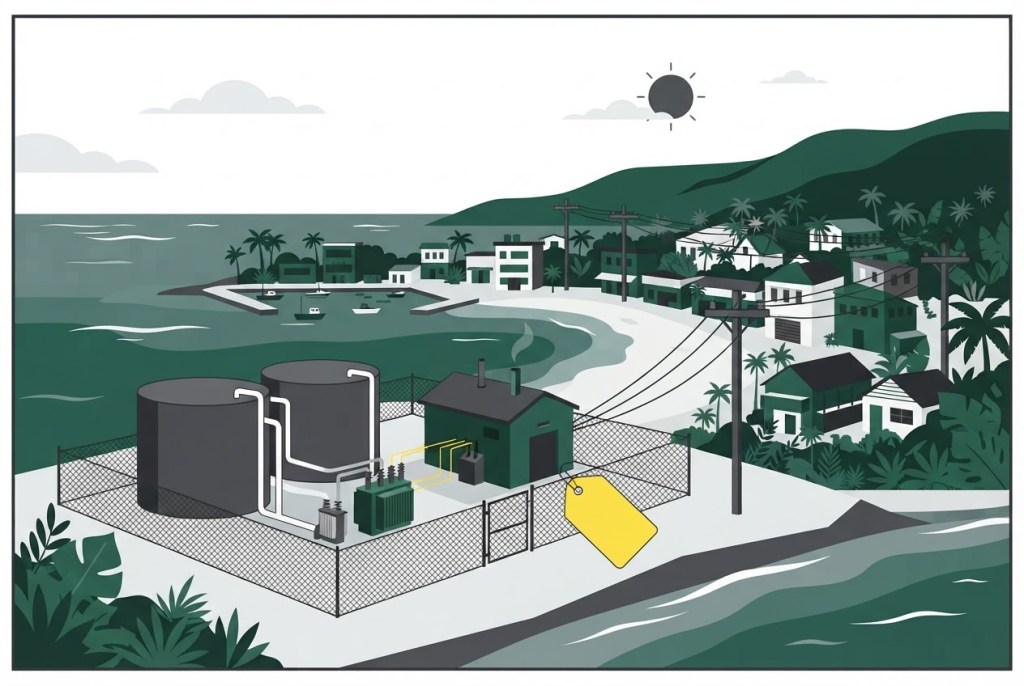
PORT MORESBY — PNG Power has a new man in the hot seat, and he has been handed three simple instructions: keep the lights on, collect what is owed, and be honest with customers. Simple to say. The last six people to hold the job will tell you how hard it is to do.
The PNG Power Ltd (PPL) board announced on 23 November that director and deputy chairman Noel Mobiha has been appointed acting chief executive, with National Executive Council approval, PNG Bulletin reported. He replaces Paul Bayly, who resigned last month. Board chairman Malcolm Lewis said Mr Mobiha “knows this business and he knows this country”, and that the search for a permanent chief executive would be open and merit-based. The appointment has the backing of Richard Maru, the minister responsible for PNG Power, and shareholder Kumul Consolidated Holdings.
Mr Mobiha will work to a 90-day plan: stabilise generation and cut outages in Port Moresby, the Ramu grid and the Gazelle Peninsula; fix the worst-performing lines; speed up prepaid metering; recover overdue accounts; and give the public regular outage updates. He has said he will not promise that everything is fixed overnight.
A revolving door at the top
The National counted Mr Bayly as the sixth person to run PNG Power since 2018. Carolyn Blacklock resigned in 2019; Douglas Mageo acted until late 2020; Flagon Bekker left in 2021 after differences with unions; Obed Batia resigned in 2023; Nehemaiah Naris served as interim officer in charge until 2025; and Mr Bayly lasted about 18 months. Mr Mobiha is the seventh in eight years. The ABC reported last year that the company had gone through four chief executives or acting chiefs and two chairs in a single year.
No utility can carry out a long-term turnaround when its leadership changes every year or so. Power stations, transmission lines and metering programmes take years to plan and pay for.
The money
The numbers are grim. Mr Maru told The National in August that PPL owed more than K1.2 billion to independent power producers and other creditors, to be settled through a court-supervised scheme of arrangement. He has called the company one “at the edge of a cliff” and said previous boards turned a blind eye year after year. In 2025 the ABC reported that an independent analysis had found PPL insolvent yet still trading, and that Mr Lewis had warned the Government the company had been declining for 15 years.
Part of the problem is power that is never paid for. Mr Maru said in September that PPL loses 26 per cent of its revenue each month, and in August that illegal connections and theft account for more than a quarter of electricity losses, The National reported. Mr Bayly said in his farewell that total technical and non-technical losses had been cut from about 28 per cent to about 20 per cent, and that the company made its first monthly profit in more than ten years in June. Government agencies and state enterprises have also been slow to pay their own power bills. Tariffs, meanwhile, had been frozen since 2013, the ABC reported last year.
The ABC also reported that the Independent Commission Against Corruption was assessing corruption claims involving PPL and its shareholder, and cited an internal audit that questioned a grid-connection contract. Those claims have not been tested in court.
The private producers carrying the load
Independent power producers have become essential to keeping the capital running. Dirio Gas & Power, owned by landowners from the PNG LNG project areas, runs a 45-megawatt gas-fired station that has sold power into the Port Moresby grid since 2021. NiuPower, jointly owned by Kumul Petroleum and Oil Search, built a 58-megawatt plant that was due to start in 2019, Business Advantage PNG reported. Both use domestic gas, which is cheaper and more reliable than diesel.
But the producers have been paid late. In September 2024 Dirio shut its Port Moresby station over more than K240 million in unpaid bills, forcing emergency load-shedding. The chair of the producers’ association warned the ABC last year that they could not keep absorbing losses. A utility that cannot pay its suppliers puts the whole grid at risk.
El Niño: drought hits the dams
This year the weather made things worse. As El Niño dried out the Sirinumu Dam, PPL began load-shedding in Port Moresby in June, warning it could last up to ten months, The National reported. Hydro output from Rouna fell and the diesel-fired Moitaka station was used to fill the gap. Mr Maru has also warned that relying on the Ramu hydro plant is risky in droughts. Diesel is expensive, and every kina spent on fuel is one not spent fixing the network.
Why it matters
Energy is the input behind almost everything a developing economy does: factories, cold storage, hospitals, schools, mobile networks and water pumps. The World Bank says only about one in five Papua New Guineans is connected to the grid, and fewer than 15 per cent in rural areas, against a national target of 70 per cent by 2030. Without reliable, affordable power, that target and the jobs that come with it stay out of reach.
For those already connected, blackouts are a tax on business. Many firms run their own generators, paying twice for power. Lae Biscuit Company owner Ian Chow told the ABC that cheaper power could cut his costs by about 10 per cent. Investors notice. A country selling itself at PNG Investment Week this month needs a power system that does not make every factory buy a generator.
The Government’s answer is restructuring: selling 18 loss-making B and C centres, settling creditors and selling a minority stake in the main grids, with the State keeping control. Supporters say private capital and discipline are overdue. Sceptics, including the producers’ association, question who will invest in a company this indebted, and unions and consumers worry about jobs and tariffs.
What happens next
Watch Mr Mobiha’s 90-day plan, whether outages fall in Port Moresby, Lae and Kokopo, how quickly state agencies settle their bills, the creditor scheme, the B and C centre tender due back to Cabinet by 31 January, and the partial sale planned for early 2027. Above all, watch whether the next permanent chief executive is given the time and backing to finish the job.
Image: Illustration.



Leave a Reply