
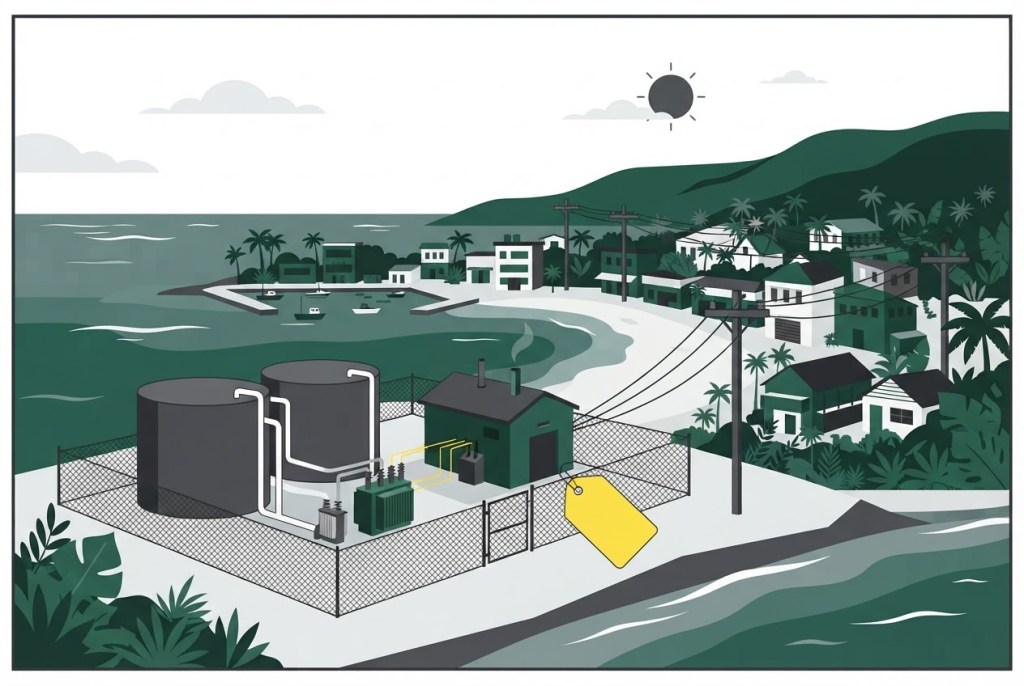
If you live in Wewak, Alotau, Kimbe, Buka or Tari, your electricity could soon come from a new owner.
The National Executive Council has approved the sale of 18 PNG Power Limited (PPL) “B and C” centres through an open public tender, Prime Minister James Marape announced. These are the smaller, mostly diesel-powered stations that supply towns away from the main grids.
The centres up for sale are Aitape, Daru, Maprik, Vanimo, Wewak, Angoram, Finschhafen, Samarai, Alotau, Kerema, Popondetta, Kavieng, Arawa, Buka, Lorengau, Kimbe, Bialla and Tari.
The numbers behind the sale
According to the Government, an assessment by advisers KordaMentha found the 18 centres together run at a loss of about K54.1 million a year before interest, tax and depreciation. Most rely on diesel, leaving them exposed to fuel costs, supply problems and fuel theft. The Government expects the reform to save PPL about K70 million.
Provincial governments get the first chance to buy, including through joint ventures with private partners such as Ok Tedi Energy. Kumul Consolidated Holdings (KCH) must report back with valuations, tender results and preferred bidders by 31 January 2027, and no sale will be final without Cabinet approval. “This is not simply about selling off assets and walking away,” Mr Marape said.
Energy Minister: consumers must not pay the price
Energy Minister Peter Isoaimo has said he supports the reform but wants the National Energy Authority (NEA), the sector regulator, to receive the sale documents in time to assess them and advise the Government before final decisions, according to a statement reported by PNG Online News. He said success would be judged on whether the reforms deliver investment, better infrastructure, reliable services and affordable power for the people.
Why it matters
PNG Power’s troubles are no secret, and the Government’s own ministers have been blunt. Richard Maru, the minister recently given responsibility for PNG Power, has described the company as insolvent and “at the edge of a cliff”, with more than K2.3 billion in loans, blackouts, and some of the highest tariffs in the world. Chief executive Paul Bayly said last year the company loses about K300 million a year, roughly half through poor networks and half through unmetered or stolen power. Government agencies and SOEs also owe PPL about K277 million in unpaid bills.
For businesses in these towns, power cuts mean lost trade, spoiled stock and the cost of running private generators. A new owner could bring investment and more reliable supply, but it could also mean new tariffs. The Government’s release does not say what will happen to PPL staff at the centres.
What happens next
Watch for KCH to advertise the tender, for which provinces step forward to buy, and for the NEA’s advice on tariffs and consumer protection. The bigger question follows: the planned partial sale of PPL’s main grids, which KCH says the State intends to keep 51 per cent of. Business Melanesia will follow every step.
Image: Illustration.




Leave a Reply