
SUVA — For years Fiji’s stock exchange was a quiet place where a few big institutions swapped blocks of shares. Then it went to the villages.
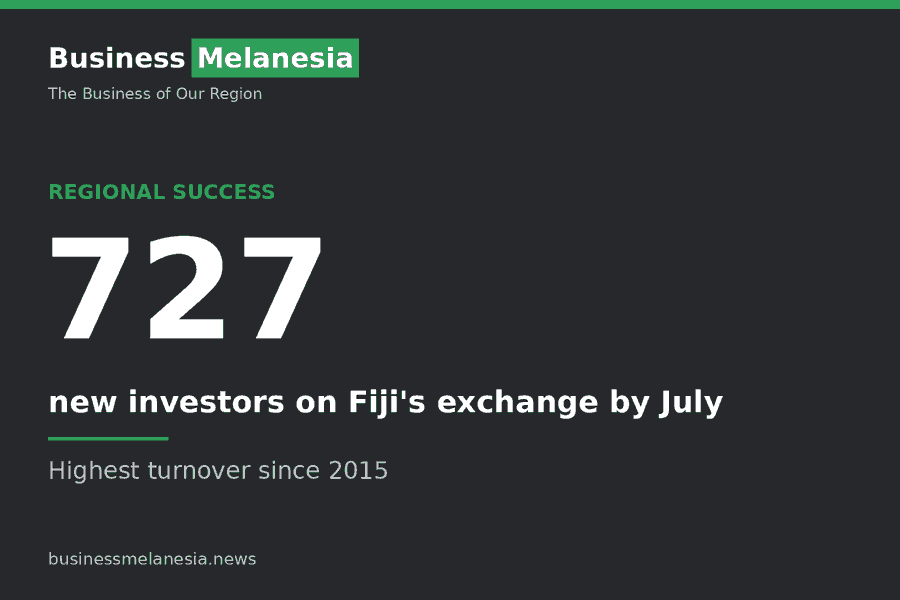
The South Pacific Stock Exchange (SPX) says 727 new investors joined the market in the first seven months of 2026, more than triple the same period last year, with record sign-ups in June and July. Trading value reached F$77.7 million by July, already beating the whole of 2025, which was itself the busiest year since 2015. At its annual awards in Suva this month, the exchange celebrated a market that is finally growing.
From boardrooms to villages
The change began in mid-2024. Under chief executive Sheraj Obeyesekere, SPX launched an outreach campaign aimed at everyday Fijians, taking the message of share ownership to more than 80 communities in its first year. “These results are not a single year’s outcome,” Mr Obeyesekere said, crediting a deliberate programme to make the market “more visible, more accessible and more relevant”.
The companies did their part. Listed firms paid a record F$103 million in dividends in 2025, with 19 of the 20 reporting a profit, according to SPX. The exchange also recorded its first year with both a new share listing and a corporate bond, and licensed its first new stockbroking firm in 25 years.
Why it worked
Three things came together. Steady profits and dividends gave people a reason to buy. A stronger economy, carried by tourism, kept those profits coming. And the exchange stopped waiting for investors to find it, going out to explain shares in plain language. More brokers and new listings gave the new money somewhere to go.
Challenges remain. Fiji’s market is still small, and the Australia Fiji Business Council has noted that the real test is turning this surge into lasting liquidity and more listings. El Niño and a downgraded 2027 growth forecast could also test investor nerves.
The lesson for PNG
Our take: PNG has its own exchange, PNGX, strong companies and thousands of workers with retirement savings. What Fiji shows is that a stock market grows when ordinary people are invited in. Investor education in schools, churches and provincial centres, simple mobile sign-ups, and more PNG companies willing to list and share their success would let Papua New Guineans own a slice of the businesses they work for and buy from. That is how wealth stays at home.
What’s next: SPX says more market development work is under way, and all eyes will be on whether new listings follow the new investors.
Know a business success story from PNG or the Pacific? Tell us at news@businessmelanesia.news.
Image: Business Melanesia.



Leave a Reply