
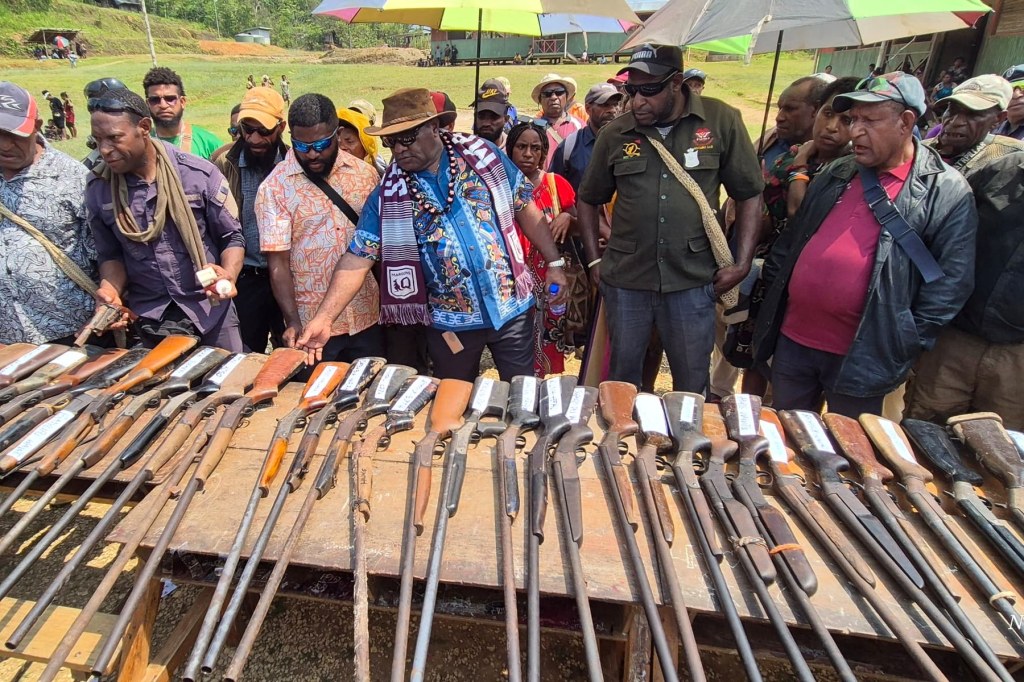
LAKE KUTUBU — In the hills above PNG’s oldest oil fields, a table stretched across a village ground filled with guns. Homemade shotguns with taped barrels lay beside factory rifles, each with a paper tag. Men who once carried them stood behind the table and let them go.
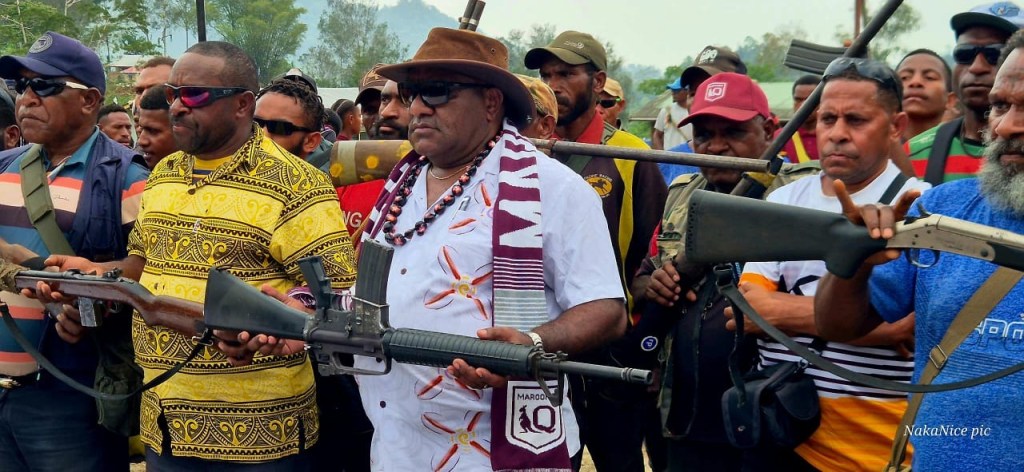
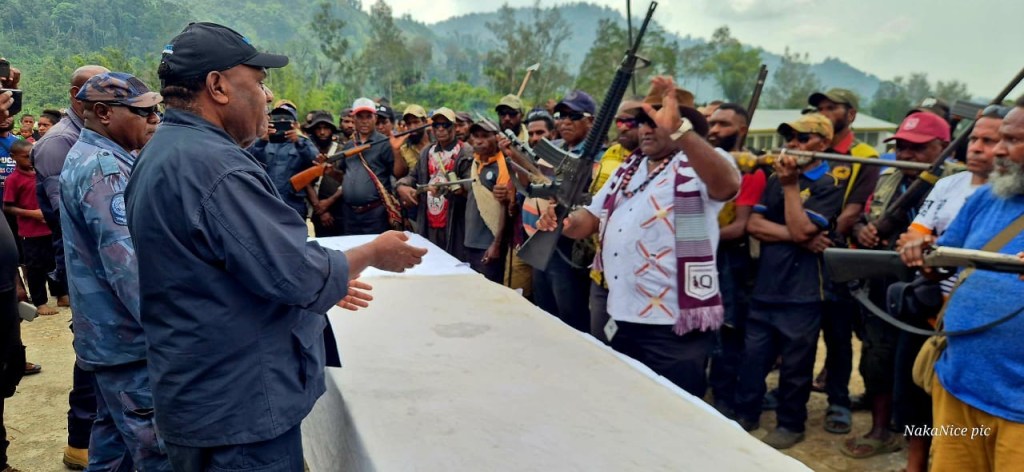
The surrender in the Kutubu and Moro area of Southern Highlands in late October was led by John Kila, President of the Kutubu Local Level Government. Communities handed in dozens of firearms under the national gun amnesty, which Cabinet has extended to 25 December.
What one leader can do
Mr Kila has led the Kutubu LLG for years, and he has put his weight behind law and order at home: supporting local policing with vehicles and station facilities, backing schools, and stepping in to mediate when disputes threatened the peace.
Leading a gun surrender is the hardest test of that kind of leadership. In the Highlands a gun can mean protection, pride and payback all at once. No police order can make a man give it up. He hands it in because someone he trusts has asked him to, and because he believes his neighbours will do the same. That trust is built slowly, in village meetings, at funerals and in the long work of settling disputes before they become fights.
That is why the scene in Kutubu matters beyond the numbers. It shows that the most powerful security tool in a project area is not a fence or a checkpoint. It is a local leader whom people follow.
Why investors are watching
Few places carry more of the national economy on their shoulders. The Kutubu and Moro oil fields began PNG’s petroleum era in the early 1990s, and the PNG LNG pipeline from Hides passes through the area on its way to the plant outside Port Moresby. Santos, the operator, and its partners depend on the area staying calm, as do the trucking, catering, security and maintenance firms that serve them.
Investors in PNG resources price in risk: road closures, stopped convoys, workers sent home, sites shut by fighting. Every one of those costs money, and every one makes the next investment decision harder. When a community disarms by its own choice, that risk falls. For a country hoping to land more projects, from Papua LNG to new mines, a calm Kutubu is a better advertisement than any investment brochure.
It helps government too. Peace lets services reach the people: teachers stay at their schools, health workers stay at their posts, and money meant for development is not swallowed by security.
The national push
The Marape-Rosso Government’s amnesty, led by Police Minister Sir John Pundari, lets people hand in illegal weapons without being charged. Sir John has called it “a national movement for peace”. In September Prime Minister James Marape praised Southern Highlands and Hela leaders for surrenders at Nipa and Tari, and asked districts to help those who give up guns into small businesses.
Police say enforcement follows the deadline, with cordon-and-search operations. The task is huge: a UN-commissioned report by former Defence Force commander Jerry Singirok estimated about 100,000 illegal guns in the country, and the shooting of two villagers at a Maprik gold site this week shows the problem reaches well beyond the Highlands.
After the guns: a future for the young men
A gun handed in is a start. What keeps it from being replaced is a reason to live differently. Many of the young men in project areas have grown up next to billion-kina operations without a trade, a job or a steady wage of their own. Some drift into alcohol, drugs and crime. A gun can feel like the only power they have.
The answer is practical. Technical and vocational colleges can train electricians, mechanics, welders, carpenters and plant operators, the skills the oil and gas fields need every day. Contractors can take local apprentices. Small loans and training can turn young men into farmers, transport operators and suppliers, as the Prime Minister has urged. Sport, church and youth groups can give them a team and a purpose.
Each partner has a part to play. Government can tie amnesty rewards to training places. Developers and their contractors can open apprenticeships and buy more from local businesses. Landowner companies can put a share of their benefits into youth programmes rather than handouts. If the young men who handed in guns this year are working next year, Kutubu will have shown the whole country what lasting peace looks like.
Our take
Project areas have received royalties, roads and jobs for decades. What Kutubu is showing is the other half of the bargain: leaders who take responsibility for peace at home. Mr Kila’s example deserves to be copied by presidents and councillors at Hides, Porgera and the Papua LNG sites. The gain will be counted not only in guns collected, but in investments made and lives saved.
What to watch: how many more Southern Highlands and Hela LLGs hold surrenders before 25 December, whether the surrendered guns are publicly destroyed, and whether developers back youth training in the communities that disarm.
Main photo: Firearms handed in at the gun surrender in Kutubu, Southern Highlands, in late October. Photo: NakaNice, supplied.




Leave a Reply