
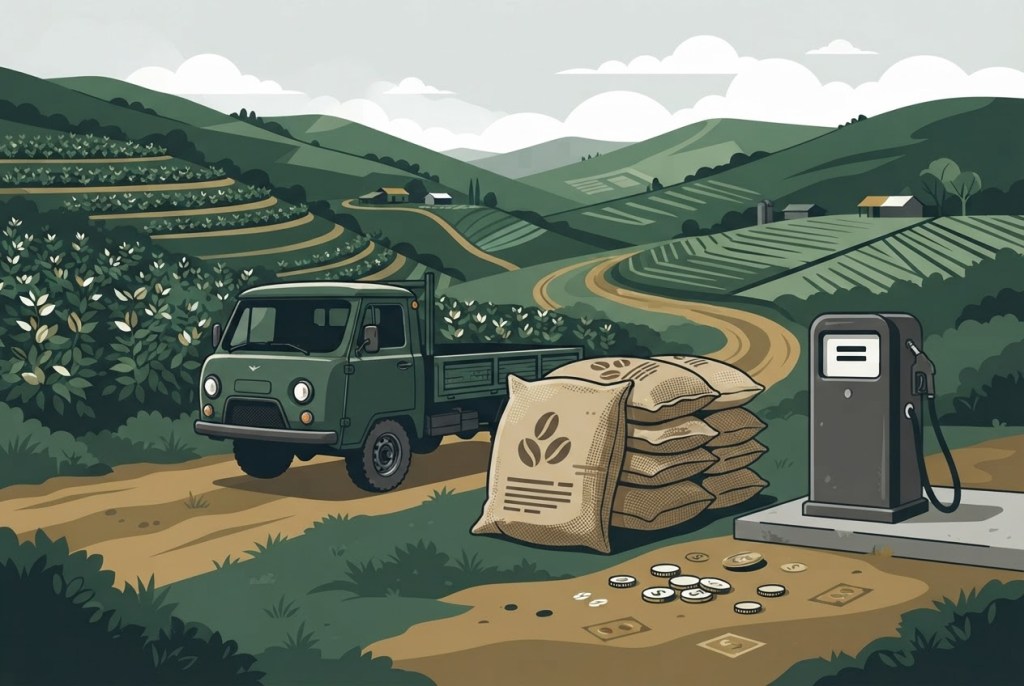
MAPRIK — For coffee grower Aron Bun, getting five bags of beans from his village of Albinama into Maprik town now costs about K230: some K40 a bag in freight, plus K30 in PMV fares there and back, The National reported this week.
For a village family, that is a big slice of what the beans will earn. PMV operators have pushed up fares and freight as fuel costs rose, and farmers further from town feel it most.
Some buyers are stepping in. JS Coffee has been buying beans from villagers and carrying them to town at no extra charge, the paper reported, which let growers like Mr Bun get their crop to market.
Relief running out?
The pressure may build. ICCC chief executive Roy Daggy warned businesses in early November that the Government’s fuel support was expected to end in December, and urged them to prepare. He said about 60 toea of the pump price came from the kina’s depreciation, a cost no regulator controls.
Prime Minister James Marape has promised that the 2027 Budget, now due on 1 December, will keep relief on 13 essential household items and fuel, and look at income tax cuts for low earners.
Our take
Rural families pay for fuel twice: once at the pump and again in the freight that carries their crops out and store goods in. Pump-price relief in Port Moresby does little for a grower whose costs are set by a PMV operator on a rough feeder road. Buyer-funded transport like JS Coffee’s is a smart stopgap, and good business for a buyer who wants the beans. The lasting fix is roads and market access, so the coffee economy, which carries thousands of families, does not hinge on the price of diesel.
What to watch
The ICCC’s December fuel price announcement; whether the Budget extends fuel relief beyond 31 December; and whether more coffee buyers follow JS Coffee’s lead before the next flush.
Image: Illustration.




Leave a Reply