
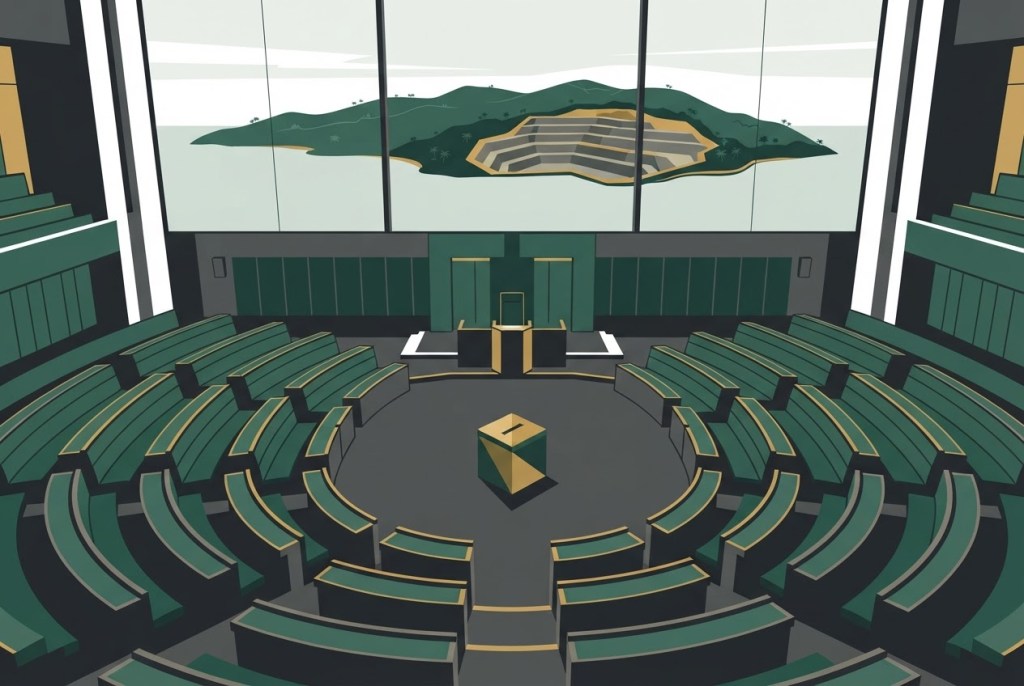
PORT MORESBY — Parliament returned this week for what may be the most consequential sitting since Independence. On the order paper are two decisions that will shape the country for decades: whether to ratify Bougainville’s 2019 vote for independence, and the 2027 National Budget that Treasurer Joseph Lelang is due to hand down on Thursday.
The House adjourned the Bougainville debate in October until this sitting, when the voting process was set to begin. No result had been announced at the time of writing.
The numbers that matter
In the 2019 referendum, 97.7 per cent of Bougainvilleans chose independence over greater autonomy. That vote was non-binding. Under the Constitution, the final say rests with the National Parliament, and the bar is high: ratification needs an absolute three-quarters majority, or 89 of the 118 MPs.
Opening the debate in October, Prime Minister James Marape told the House it had no choice but to deal with the issue, and urged a peaceful outcome that protects national unity. MPs from both sides have since spoken at length, and the tone has been notably measured for a question this charged.
Two timetables, one island
The two governments still disagree on speed. The Autonomous Bougainville Government, led by President Ishmael Toroama, has resolved to reach self-government by 1 September 2027 and independence by 2030. President Toroama has also argued the 89-vote threshold was never agreed under the Melanesian framework the two sides negotiated.
The national government favours a far slower path. Mr Marape has proposed a negotiated transition of up to 15 years if independence is endorsed, tied to economic and security conditions, including that Bougainville cover at least 70 per cent of its budget from its own revenue.
The money
That 70 per cent test is the hard edge of this debate. Bougainville’s own 2026 budget assumed internal revenue of K46.74 million, about 5.5 per cent of its spending. Closing that gap would take a near-thirteenfold jump in locally raised money. That is why the Panguna copper and gold mine, closed since the conflict began in 1989, keeps coming back into every conversation.
Rio Tinto’s commitment earlier this month of US$250 million towards Panguna’s environmental and human-rights legacy, which we reported this morning, helps clear old wounds but does not restart a mine. Any reopening would still need landowner consent, a developer and years of construction. For investors across PNG, the signal that matters is whether this vote is settled calmly and by the rules.
Why it matters beyond Bougainville
Internationally, the stakes are rising. A new Pacific state would sit in the middle of the contest between China, Australia and the United States for influence in the region, and every partner will be watching who Bougainville turns to for money, security and trade. Supporters of independence argue it would let Bougainville choose its own friends. Sceptics warn that more small states could make the Pacific less stable, and leave PNG with a harder neighbourhood to manage.
Our take: there is no cost-free option. A “yes” opens a long, expensive negotiation over money, the mine, borders and security. A “no” or a deferral does not end the issue. Bougainville’s leaders have said they will pursue their own constitutional route if Parliament fails to ratify, which would put more than 25 years of peace-building under strain. The real test for MPs is whether they can deliver a decision that keeps the peace and keeps investors confident in the same week they pass a budget for an election year.
What happens next
Watch for the formal vote count and how MPs from each province line up. The Budget is due on Thursday, with the Government promising a balanced plan. Whatever the result, the outcome goes to the Bougainville House of Representatives, and the two governments return to the negotiating table. Business Melanesia will report each step and what it means for the economy.
Image: Illustration.




Leave a Reply