
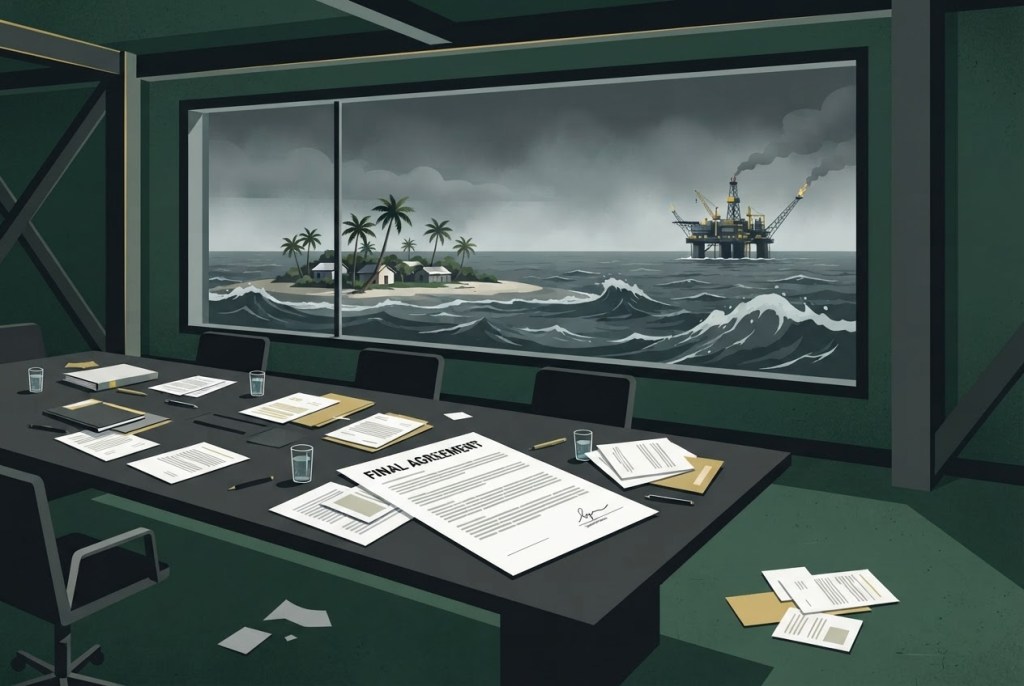
The UN climate summit in Antalya, Turkey, ended on Sunday the way few expected: with no deal at all. And Pacific island nations were among those who walked away from the table rather than sign.
What happened
COP31, held jointly by Turkey and Australia, overran by almost two days, CNBC reported. The final draft of the summit’s main decision made no mention of fossil fuels — a retreat from the 2023 COP28 agreement to “transition away” from them. The Conversation reported that nearly 40 countries, including the European Union, the United Kingdom, Panama, Vanuatu and the Marshall Islands, formally objected. COP31 president Murat Kurum said no further draft would follow, NBC News reported.
The Marshall Islands’ delegate, Kathy Jetn̄il-Kijiner, told the plenary her country could not join consensus, according to Democracy Now’s transcript. Tuvalu described the fortnight as challenging because of a lack of engagement and transparency, The National (UAE) reported. Days earlier, Fiji’s Climate Change Minister Tabuya had already rejected a draft text, the Fiji Times reported via PACNEWS.
Not everything was lost. CNBC reported that more than 90 countries backed a separate pledge to raise electricity’s share of global energy use from about 23% to 35% by 2035. And Tuvalu and Vanuatu joined a coalition to phase out fossil fuel subsidies during the talks, PACNEWS reported.
Our take: what it means for PNG
PNG sits in an awkward spot. It is a Pacific island nation feeling climate damage now — this year’s El Niño has brought frost and drought to Highlands food gardens. It is also a gas exporter whose budget leans on PNG LNG and whose biggest hope, Papua LNG, is nearing an investment decision.
Gas producers argue LNG is a cleaner bridge fuel that helps Asian buyers move off coal, and that developing countries have a right to earn from their resources. Pacific campaigners counter that every new gas field locks in decades of emissions. A summit that cannot even name fossil fuels gives PNG’s gas plans breathing room in the short term — but it also leaves a vulnerable region without the global commitments it needs, and climate finance remains as uncertain as ever.
There is a sting for Canberra too. Australia gave up its bid to host COP31 as a “Pacific COP” last year in a compromise with Turkey, a move PNG criticised at the time, Al Jazeera reported. Co-holding a summit that ended in collapse will not help its standing with Pacific neighbours.
What happens next
Watch for a Pacific Islands Forum response, and whether PNG states a clear national position on the collapse. For investors, the immediate signal is that global pressure on new gas projects did not harden in Antalya. For farmers in the Highlands and families on low-lying islands, the wait for real action goes on.
Correction: An earlier version described Australia as leading the negotiations. CNBC reported the summit was held jointly by Turkey and Australia.
Image: Illustration.



Leave a Reply