
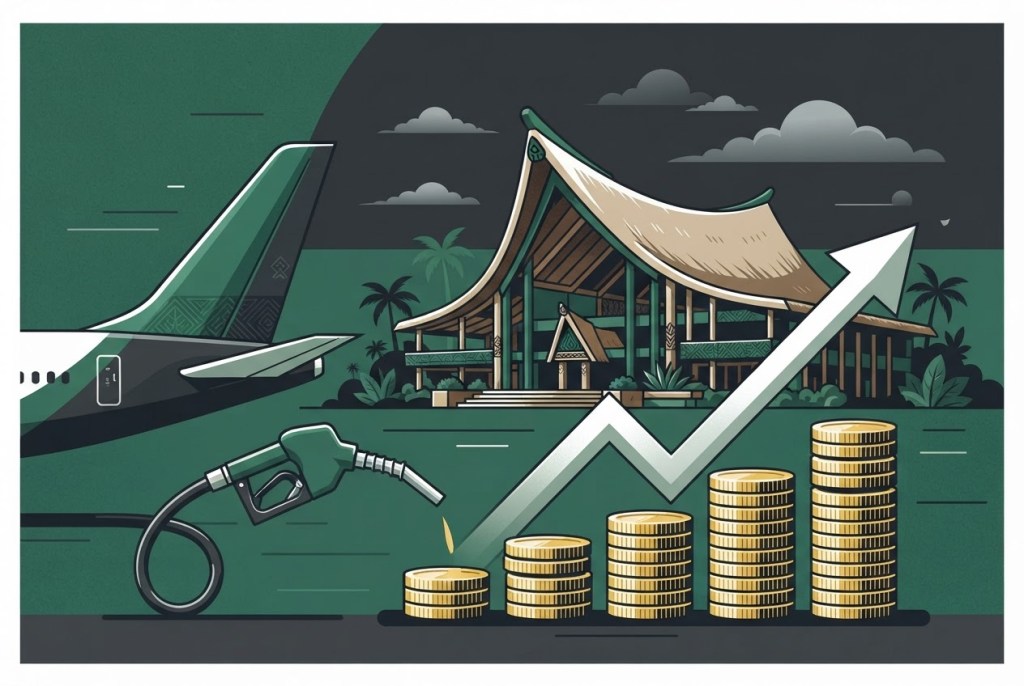
Port Moresby — Flying home for Christmas just got dearer, the fuel subsidy has ended, and the GST break at the pump runs out in five weeks. That is the backdrop as Treasurer Joseph Lelang prepares to hand down his first national budget.
Parliament resumes at 2pm today, with the 2027 Budget the centrepiece of the November sitting. The Government has said it will be balanced and above K30 billion — the first since Mr Lelang took over Treasury from Ian Ling-Stuckey earlier this month, as we reported yesterday.
Travellers are already feeling the pressure. Air Niugini raised domestic base fares by nine per cent from Friday, plus a K250 per-sector domestic fuel surcharge, The National reported. Chief executive Alan Milne said jet fuel prices had risen 93 per cent since the conflict involving Iran began, adding about K820,000 a day to the airline’s costs. He credited the Government’s fuel subsidy with holding off domestic fare rises for months, and said fares would be reviewed monthly.
Opposition Leader James Nomane says the real culprit is Government policy on the kina, which he said has lost about 25 per cent of its value against the US dollar since 2019. He said the fuel subsidy had failed to improve people’s lives and warned that higher fares would hit families and students travelling home for the holidays.
Prime Minister James Marape has said the Government will adjust its domestic fuel relief programme to line up with global market conditions.
The sums are big. Business Advantage PNG estimates the fuel support package introduced in April has cost the State a little over K1.2 billion — about four per cent of the 2026 Budget. The direct subsidy ended on 8 November. The GST exemption on fuel is due to end on 31 December, and the Budget will show whether it is extended.
The currency adds to the squeeze. The same publication reports the kina is down 7.5 per cent against the US dollar over the past year and 12.6 per cent against the Australian dollar. The Bank of PNG manages the kina under what it calls a crawl-like exchange rate arrangement, and has a policy rate of 5 per cent.
Why it matters
Fuel and the exchange rate flow into almost every price in PNG — bus fares, freight, store shelves, power and airfares. A weaker kina makes imports dearer and expatriate salaries less attractive, but it helps exporters of palm oil, cocoa, coffee, minerals and gas, whose earnings are in US dollars. The Treasurer must weigh relief for households against the Government’s promise of a balanced budget, in the final budget before the 2027 election.
What happens next
Watch this afternoon for the headline spending and revenue figures, any extension of the fuel GST exemption, and what the Budget assumes about the kina and Papua LNG, which faces its 15 December investment-decision deadline. The Opposition will respond during the budget debate, and Air Niugini’s first monthly fare review is due in mid-December. Business Melanesia will report the Budget figures as soon as they are tabled.
Image: Illustration.




Leave a Reply